
#18135score
Agents2d ago
Rabbit Is Back, This Time With an AI Agent App
Rabbit is launching OS3, a cross-platform AI agent that runs on existing devices, two years after it released dedicated AI hardware.
The week’s AI news, one entry per event. Stories rank higher when more independent outlets report them, when they are squarely about AI, and when they are recent.
Rabbit is launching OS3, a cross-platform AI agent that runs on existing devices, two years after it released dedicated AI hardware.

OpenAI is calling for international standards governing recursive self-improvement, in which AI systems build the next generation of AI. The company says the US should lead on global measurement.

The UN's AI science panel warned in its first thematic report that there is no assurance humans will keep control over AI agents. Co-chair Yoshua Bengio pointed to OpenAI's Hugging Face incident as the first case combining such factors.

Google Photos is adding an AI-powered Redact tool that can quickly blur parts of an image.

Leaders from Waabi, Shield AI, and General Motors will speak on the Real World AI Stage at TechCrunch Disrupt 2026 about building AI. Discounted passes are available until September 25.
A user on AI Stack Exchange asks how to convert intuition into feature vectors for computing similarity or closeness, using the example of comparing writing system glyphs across over 100 scripts, and mentions asking ChatGPT.

The Verge published a first-person account of using Meta's AI agent, describing it as friendly but effective at spending the author's money.

A LessWrong post distinguishes between two categories of superintelligence, termed minimal and maximal, arguing that conflating them is common in discussions.

Snorkel AI raised $350 million in a Series E round led by Insight and S32, valuing the company at $3.5 billion.

Firecrawl Inc., which provides web scraping tools for AI agents, raised $75 million in a Series B round led by Smash Ventures, with participation from Y Combinator and Altos Ventures.

The Guardian examines claims from big technology companies that artificial intelligence can cure cancer, asking how far the technology can realistically advance health treatment.

The Biological Computing Co. plans to partner with AWS to sell a text-to-video model that uses a software layer derived from lab-grown nerve cells, which the company says runs five times faster and costs 80 percent less.
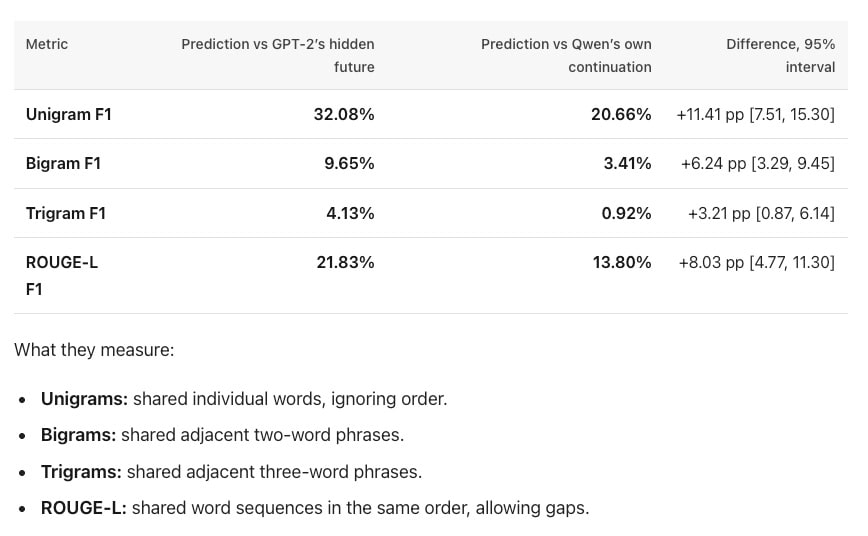
The post describes experiments using Qwen models to predict GPT2 completions, and says it is a crosspost from a substack and part of Lossfunk, where meta-cognition in LLMs is being investigated.

Teradata is expanding its Tera AI assistant with a context engine and execution system designed to help agents carry out data tasks across enterprise systems.

Heidi Health Trading Pty Ltd., a healthcare AI startup, announced it has raised $340 million in new funding to support its next phase of growth and deepen adoption throughout health systems.
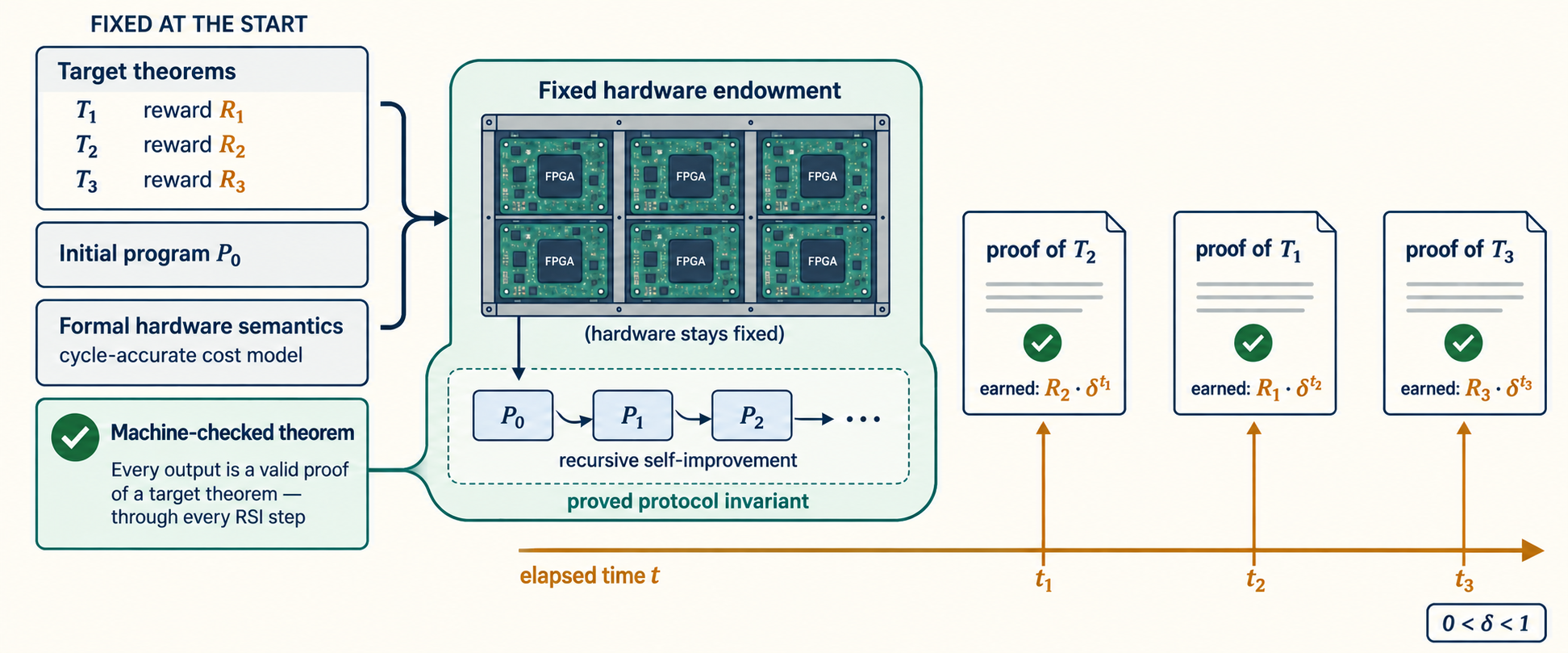
A LessWrong post proposes confining recursively self-improving AI as an approach to aligning it.

Kantata Inc. released Agent Studio, a tool that lets services firms build custom AI agents by describing the desired job in plain language.

Meta patched a zero-day vulnerability in its Muse macOS app that could let an attacker take control of the AI agent. Security researcher Patrick Wardle found the bug, which used an undocumented Muse setting.

OpenAI says a new internal model solved more than 100 open math problems after a month of training. The company is backing an independent advisory group at the Institute for Advanced Study amid criticism from mathematicians.

Anthropic claimed its model Claude Mythos outperforms most security experts at finding software vulnerabilities, and an OpenAI–Hugging Face hacking incident followed.